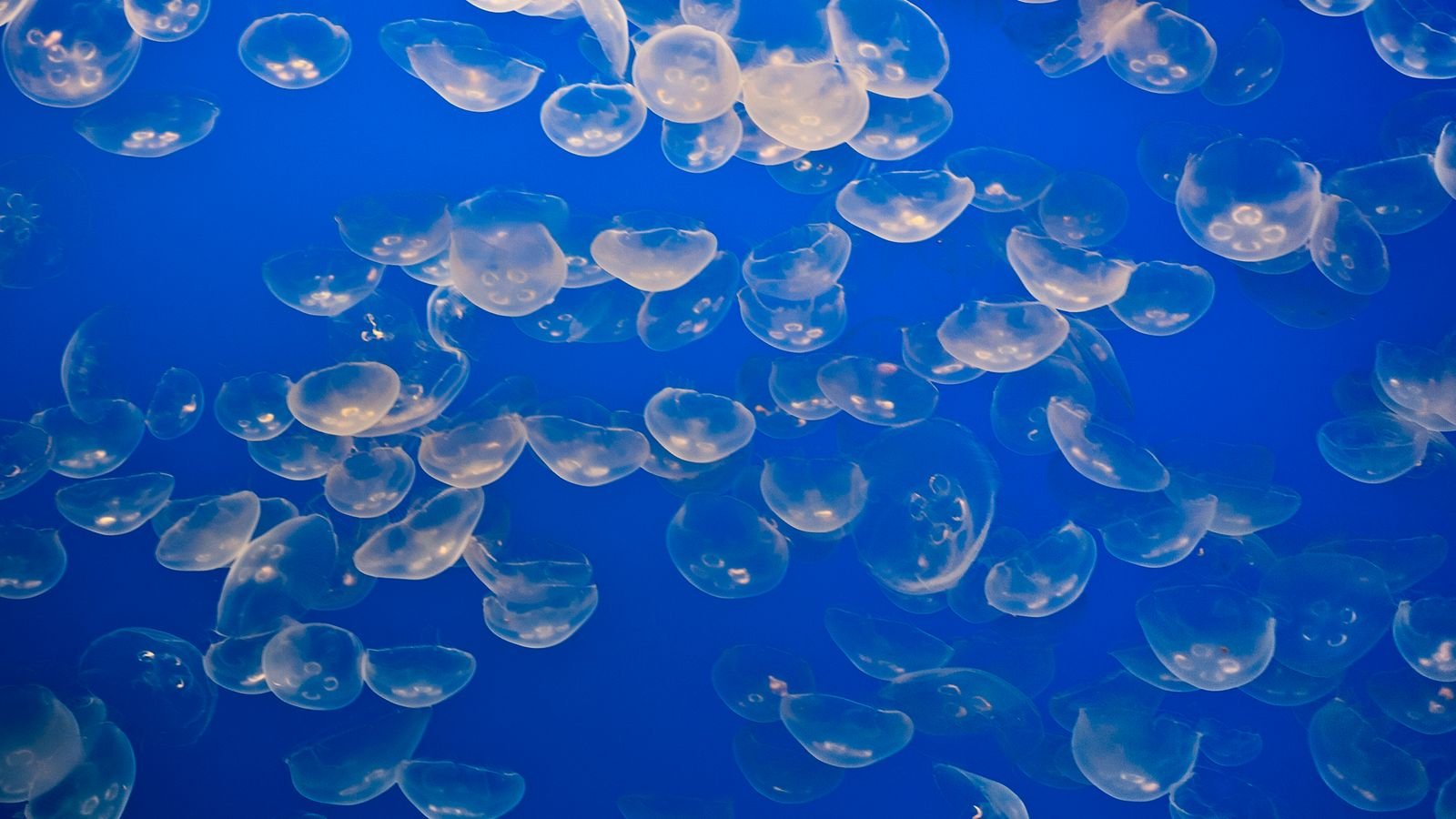
Jellyfish populations in the North Sea, a key water source for Gravelines, have surged dramatically.
A colossal swarm of jellyfish has forced a temporary shutdown of four reactors at France’s biggest nuclear power station, highlighting the growing environmental challenges facing critical infrastructure.
The influx overwhelmed the filtration systems at the Gravelines nuclear power plant in northern France late Sunday night.
EDF, the plant’s operator, told that an “exceptional and unforeseen” jellyfish surge triggered automatic shutdowns of units 2, 3, and 4 between 11pm and midnight on August 10.
Unit 6 followed, halting operations shortly after 6am on Monday, August 11.
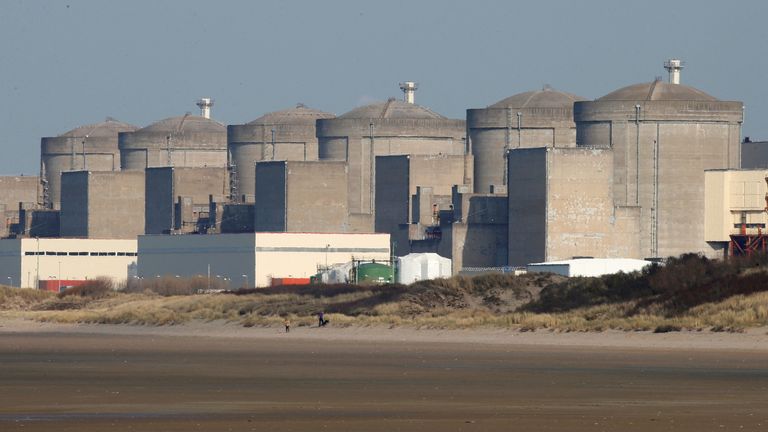
Positioned along the coast between Calais and Dunkirk, Gravelines boasts six reactors capable of generating 5.4 gigawatts, sufficient to power roughly 5 million households.
The Gravelines nuclear power plant in northern France. File pic: Reuters
EDF stated that the affected pumping stations are in the non-nuclear section of the facility, ensuring “no compromise to the plant’s safety, worker well-being, or environmental standards.”
The plant, a cornerstone of France’s energy grid, has suspended power production as crews work to remove the jellyfish clogging the system. Two other units were already offline for routine maintenance.
Read more :
Staff Warn UK’s Alan Turing Institute Faces Collapse Amid Funding and Leadership Concerns
Claude’s New AI Feature Could Help You Shop Smarter—And It’s Already Taking Jobs
Why the shutdown happened
Explosion in Jellyfish Numbers
Marine biologists report a dramatic rise in jellyfish populations near Calais, fueled by warming ocean temperatures and abundant plankton, their primary food source.
“Higher sea temperatures boost jellyfish reproduction, and with the North Sea warming, their breeding cycles are extending significantly,” said Derek Wright, a marine biology consultant at the National Oceanic and Atmospheric Administration Fisheries.
“Jellyfish also travel globally via cargo ships, entering ballast tanks in one region and being discharged in distant waters,” he added.
Climate-Driven Infrastructure Risks
Gravelines relies on a canal linked to the North Sea, a region home to multiple jellyfish species, for its cooling water. This incident underscores how climate change, by warming seas and altering ecosystems, poses increasing risks to infrastructure like nuclear plants.
Similar disruptions have occurred at other coastal facilities, such as Scotland’s Torness nuclear plant, where jellyfish have repeatedly blocked intake pipes.
In 1999, a jellyfish swarm caused a major blackout in the Philippines, illustrating the global scope of this issue.
Source: This article is based on a report by Siobhan Robbins, published by Sky News on August 11, 2025. Read the original at Sky News. Additional context was drawn from posts on X discussing the environmental and economic impacts of jellyfish swarms.