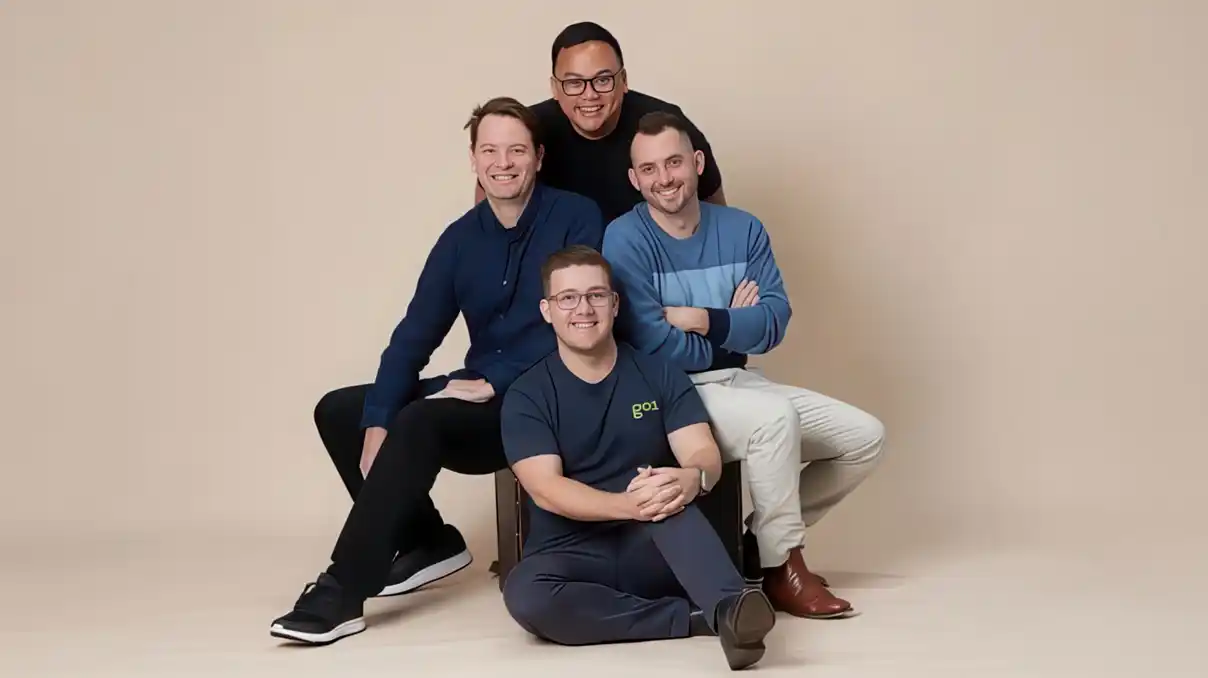
Billion-dollar start-up Go1 emerged from a modest Brisbane garage, becoming one of Australia’s premier tech successes with a recent valuation of $3 billion. Today, its co-founders Vu Tran and Andrew Barnes, alongside entrepreneur Gopi Sara, have introduced their latest venture, OneMRI, positioning it as the nation’s pioneering nationwide service for comprehensive whole-body MRI scans.
The team believes this new billion-dollar start-up opportunity rivals the scale of their previous achievement.
A group of prior Go1 backers, leaders, along with medical professionals and imaging specialists, have invested $2.5 million in an initial funding phase to support OneMRI’s countrywide growth. This comes as more people keen on health monitoring seek full-body assessments but struggle to find suitable options.
Tran, who balances entrepreneurship with his role as a family doctor, shared that the idea for OneMRI stemmed from challenges in directing patients to appropriate MRI facilities. He noted the absence of Medicare support and the lack of dedicated providers, highlighting underused equipment juxtaposed with growing public interest in scans.
As a physician with a decade of experience, Tran observed a shift toward proactive wellness among patients, contrasting with the system’s emphasis on treating illness rather than promoting health.
Barnes, who led Go1 as chief executive for almost ten years before transitioning out last August while staying involved on the board, co-founded the billion-dollar start-up with Tran—his former classmate—plus Chris Eigeland and Chris Hood back in 2015. That year, they gained entry into the renowned Y Combinator program in Silicon Valley.
Currently, over 10,000 entities rely on Go1 for employee development, with 50 million individuals having engaged in its learning modules. Reports suggest Go1’s leadership is considering a public offering, aiming to educate one billion people worldwide.
You May Also Like:
AI Having ‘Sensual’ Chats with Children Sparks Outrage, Prompts Meta Investigation
Openai CEO’s Alarming Warning: AI Market Bubble Poised to Explode
Regarding OneMRI, Barnes explained that conventional MRI procedures once lasted two hours, but their approach has shortened it to 45 minutes. Their vision is to further reduce costs to $500 and time to 15 minutes, enabling early detection of issues years before symptoms appear, which could have life-changing effects.
He compared it to routine checks like skin exams or breast screenings, intending to make it widely available for those interested in their well-being.
Tran reflected that launching this subsequent billion-dollar start-up prospect feels smoother than the initial Go1 endeavor a decade prior, thanks to gained expertise allowing sharper priorities and less worry over minor details. Repeating the process diminishes uncertainties.
Sara indicated that global outreach, particularly in the Asia-Pacific region, is on the agenda. The funding, which exceeded expectations, came from firms such as OIF Ventures, TEN13, Antler, Salus Ventures, AfterWork Ventures, Archangel Ventures, Black Sheep Capital, Prtnr, Larsen Ventures, and Tribe Global Ventures.
OneMRI’s scanning technology can identify more than 500 possible health issues but is meant to supplement, not supplant, targeted diagnostics for particular problems. Sara added that initial demand surprised them, leading to quick presence in cities like Sydney, Melbourne, the Gold Coast, and Brisbane, far surpassing early projections.
This story of the billion-dollar start-up Go1’s creators venturing into health innovation underscores the vitality of serial entrepreneurship in Australia, where tech pioneers are increasingly turning to preventive medicine amid rising consumer health awareness.
It also highlights broader trends in the startup ecosystem, where experience from one successful billion-dollar start-up fuels ambitious new projects that address unmet needs in healthcare accessibility.
Disclaimer: This report is based on unverified information as of August 20, 2025. Readers are encouraged to confirm details through the original sources for accuracy.
Sources: