
In a ground-breaking hypothesis that has captured the scientific community‘s attention, Harvard physicist Avi Loeb has suggested that the enigmatic interstellar object 3I/ATLAS, currently traversing our solar system, could be a nuclear-powered-spaceship rather than a natural comet or asteroid.
This audacious claim, made public on Aug. 25, 2025, challenges conventional theories of cosmic bodies and has fueled new discussions about the possibility of extraterrestrial technologies visiting our solar system.
Loeb, a renowned expert in the field of astrophysics, proposed that 3I/ATLAS is exhibiting unusual behavior that cannot be easily explained by natural phenomena. The object, first observed in 2017, has baffled scientists with its strange movement and light emission patterns.
According to Loeb, these anomalies might indicate that the object is not simply a comet or asteroid, but an advanced alien spacecraft powered by nuclear energy. His theory suggests that the object’s trajectory and brightness could be consistent with a man-made or alien nuclear-powered-spaceship

Nvidia Looking to Halt H20 Chip Production Amid China Crackdown
The scientist’s assertions are based on his analysis of 3I/ATLAS’s non-gravitational acceleration, which cannot be explained by the typical forces acting on a comet. In particular, Loeb pointed to the object’s brightness, which fluctuated more significantly than expected.
He postulated that such behavior might be the result of an artificial energy source, possibly a nuclear-powered spaceship using its power to maintain propulsion.
While Loeb’s ideas have sparked a wave of intrigue, the scientific community remains divided. Many astronomers and astrophysicists express skepticism, pointing out that natural explanations for the object’s unusual properties have not been fully ruled out.
Critics suggest that the object’s behavior might simply be the result of a previously unknown natural phenomenon. Still, Loeb’s hypothesis has ignited renewed debate about the possibility of extraterrestrial civilizations, particularly in the context of the mysterious 3I/ATLAS.
According to multiple sources, including Sky at Night Magazine, Interesting Engineering, Fox News, and Yahoo News, Loeb’s theory has gained traction in certain circles. Proponents of the hypothesis point to the object’s irregular motion, suggesting that it does not follow typical cometary trajectories.
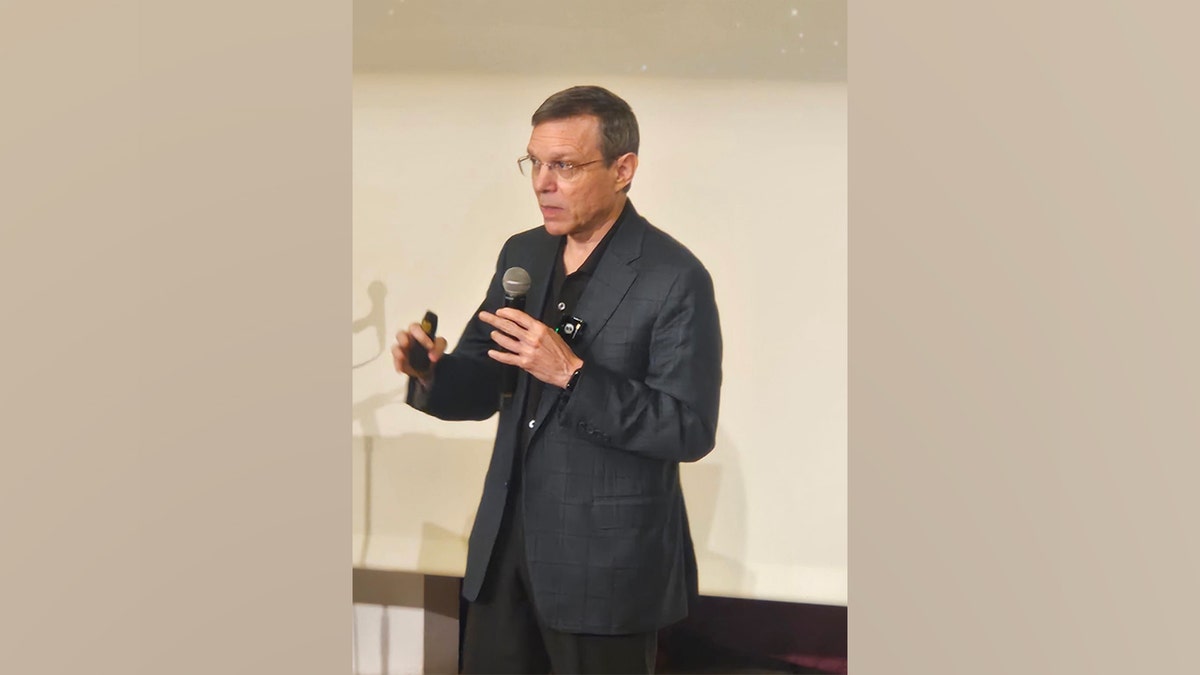
Loeb’s theory is not entirely without merit. The notion that advanced civilizations could harness nuclear power for interstellar travel is not far-fetched. Several other scientific and science fiction communities have speculated that future space exploration could involve nuclear-powered spacecraft, which might allow for much faster and more efficient travel across vast distances.
While the concept of a nuclear-powered spaceship as the origin of 3I/ATLAS is intriguing, it remains a speculative theory with no definitive proof. The scientific community has yet to reach a consensus on what 3I/ATLAS truly is.
As more data becomes available, the debate will likely intensify, and new theories may emerge. However, until further research clarifies the object’s origins, Loeb’s hypothesis will remain one of the most fascinating and controversial theories in modern astrophysics.
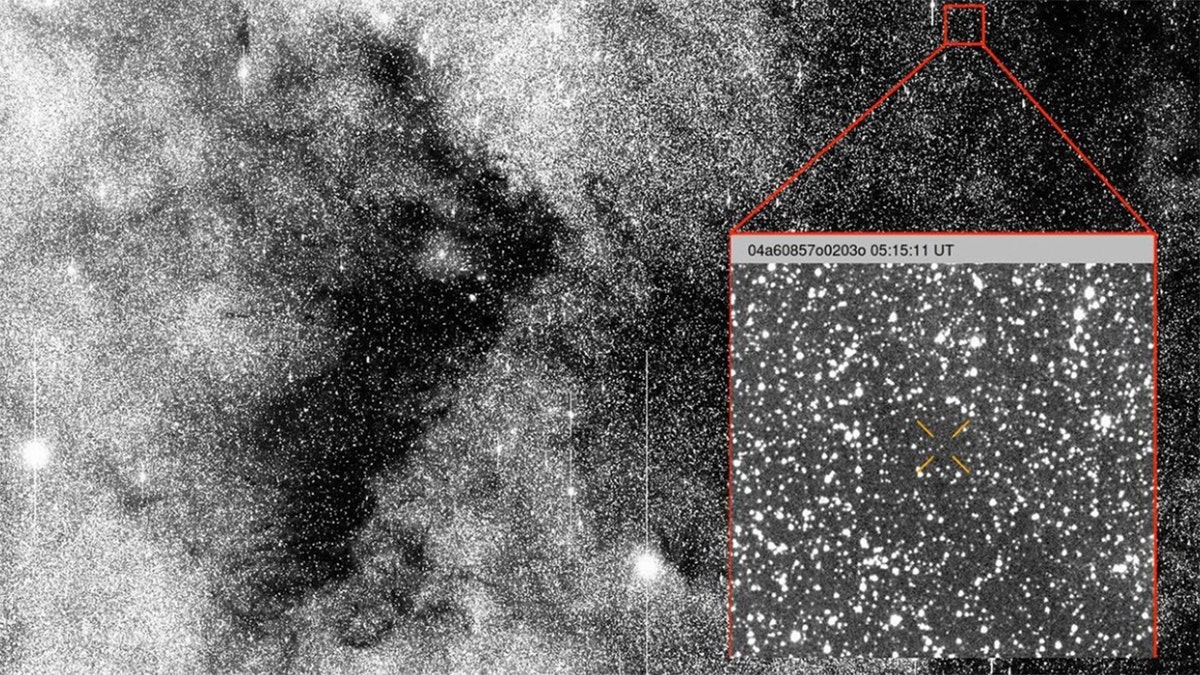
Disclaimer: The above reporting is based on the work of Harvard physicist Avi Loeb and is subject to unverified information. As of Aug. 25, 2025, there has been no conclusive evidence to support the claim that 3I/ATLAS is a nuclear-powered spaceship.
Sources: ColombiaOne, Interesting Engineering, Sky at Night Magazine, Fox News, Yahoo News.