This light sport aircraft delivers sports-car thrills in the air and on the water
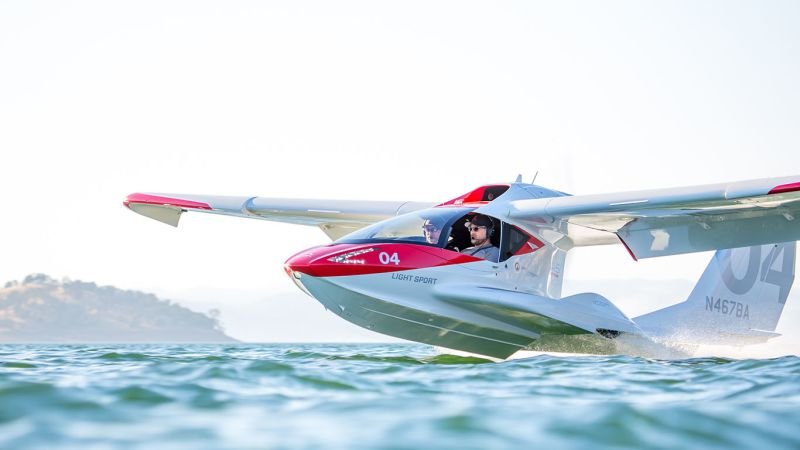
sports car with wings:It’s a sports car. It’s a boat. It’s an airplane. The ICON A5 is all three, a revolutionary amphibious light sport aircraft that’s turning heads and drawing crowds wherever it goes. After a decade of development and rigorous safety testing, the A5 is now in production, offering aviation enthusiasts a unique blend of style, versatility, and accessibility.
A new kind of flying machine
Design inspired by sports cars
The ICON A5, brainchild of former fighter pilot Kirk Hawkins, combines sleek automotive design with aviation functionality. Its lightweight carbon-fiber airframe, inspired by high-performance sports cars, gives it a futuristic aesthetic. The cockpit resembles that of a modern car, complete with a dashboard that could fit in a Porsche, making it intuitive for new pilots. The aircraft’s wings fold in just 30 seconds, allowing it to be stored in a garage or trailered like a boat, enhancing its practicality.
Amphibious capabilities
Unlike traditional aircraft, the A5 can take off and land on both water and conventional runways, thanks to its amphibious landing gear. This versatility allows pilots to transition seamlessly from cruising over lakes to flying through the skies. Powered by a 100-horsepower Rotax engine, the A5 cruises at about 100 mph, with a range of 427 miles and a 45-minute reserve, making it ideal for short, recreational flights.
Built for accessibility and safety
Ease of flying
The A5 is designed to be user-friendly, requiring only a sport pilot certificate, which demands fewer training hours than a private pilot license. Its intuitive controls and forgiving flight characteristics make it accessible to newcomers, while its sporty handling appeals to seasoned pilots. The aircraft’s stall-resistant design, featuring a wing inspired by fighter jets, ensures stability even at low speeds, reducing the risk of dangerous spins.
You may Also Like:
The iPhone 17 is coming: What to expect from Apple’s next phone line u
Scottish Scientists Develop AI-Powered ‘Superpower’ Glasses to Enhance Hearing
DevBot Unveiled: Roborace’s Autonomous Electric Racer Prototype
Safety first
Safety is a cornerstone of the A5’s design. After a 2008 crash during testing killed two employees, including the company’s lead engineer, ICON implemented rigorous safety measures. The A5 now includes a spin-resistant airframe, a first for light sport aircraft, and a built-in parachute system for the entire plane, deployable in emergencies. These features aim to make flying as safe as driving a modern car, addressing common aviation risks.
A premium price for a premium experience
Cost and availability
The ICON A5 doesn’t come cheap, with a base price of $269,000. Buyers can customize their aircraft with options like premium paint, a custom trailer, or a “flight adventure package” that includes a GoPro camera mount and a dry bag, pushing the price toward $350,000. Despite the cost, demand is high, with over 1,800 orders placed by November 2016. Production is limited to about 175 units in 2017, with plans to scale up in subsequent years.
A growing fan base
The A5 has attracted a diverse clientele, from tech entrepreneurs and car enthusiasts to seasoned pilots and adventure seekers. Its appeal lies in its ability to combine the thrill of flying with the freedom of amphibious travel. Customers like California’s John Kelsall, who took delivery in July 2016, praise its ease of use and exhilarating experience, likening it to “a sports car in the sky.”
Overcoming challenges to take flight
Regulatory hurdles
The A5’s journey to market wasn’t without obstacles. ICON lobbied the Federal Aviation Administration (FAA) for years to revise light sport aircraft regulations, securing changes that allowed the A5 to incorporate advanced safety features and amphibious capabilities. These regulatory wins were crucial to making the aircraft viable for production and consumer use.
A tragic setback
The 2008 test crash was a significant blow, claiming the lives of two key team members and prompting a safety overhaul. ICON’s commitment to addressing these issues has resulted in an aircraft that prioritizes pilot and passenger safety, with features like the parachute system and spin-resistant design setting new standards in the industry.
The future of personal aviation
Redefining recreational flying
The ICON A5 aims to make aviation more accessible, appealing to those who might never have considered flying. Its car-like cockpit, folding wings, and amphibious capabilities lower the barriers to entry, while its sporty design delivers an unmatched recreational experience. ICON’s vision is to create a new category of personal transport, blending the thrill of flight with the practicality of a boat or car.
What’s next for ICON
With production underway at its California facility, ICON is focused on meeting demand and refining the A5. The company plans to expand its market, targeting adventure seekers and affluent buyers who crave a unique flying experience. As Hawkins puts it, the A5 is about “inspiring people to fly,” offering a glimpse into a future where personal aviation is as commonplace as driving.
This article is based on a report by Matt McFarland, published by CNN on November 18, 2016. Read the original at CNN. Additional context was drawn from posts on X discussing the ICON A5’s innovative design.